
Awhile back when checking up on Andrew Bunny's Honeyee blog I came across a post about his visit to the new Couverture & The Garbstone building in West London. The post also featured a man by the name of Greg Chapman, holding his favourite piece from the store. Finding the item he was holding only to be noticed by someone of good taste and by his over all unique appearance I decided to look him up. While not finding much of anything, (search 'Greg Chapman' in Google you will come up everything and everyone else but him) Andrew Bunny graciously included a link to Greg's personal site...From there I instantly knew he'd be the next person to contact for an interview.
The London based and Manchester native has been involved with a quite impressive range of fashion companies. Performing various tasks like creative consulting work with DKNY to trend forecasting for well know staple brands like Nike and Levis, he can be seen as a sort of modern Stevedore for todays design houses and labels...
Although, the most important talent I see in Greg would be his ability to connect different companies together, therefore creating new experiences that in other words would never be made..something I've always felt to be one of the most important details within design.
Q. Can you share some information on your formal education and training, while in school did you maintain a focus on Design+Management?
A. Didn’t study, I have over 20 years in menswear from working the shop floor, to design PR marketing and product development so I pick things up along the way!!
How did you gain the initial trust from various retailers in Britain when supplying their stores with your finds from New York back in the 80’s? Oh and what kind of sneakers were they?
I was well known and people trusted my taste, I was buying Jordan’s superstars, Dunks etc…
What do you see as a main difference between the European and American marketplace when it comes to the appreciation of a well designed product? Is there more respectability from one market to the other?
I think these days people are well aware of what good product is all over the world, especially in the US UK and Japan where people share the same interests and obsessions, then there are a lot of people who don’t really give a damn! However I have seen growth within the people who do care!!
When you took on the responsibility of re-entering Fred Perry’s footwear line to the market what were some of the things you felt had been missing from the brands identity and do you feel they have successfully built upon the connections you’ve made after leaving the position, specifically speaking with their Comme des Garçons collection?
Fred Perry had not made any footwear for over 30 years, so I took a little of their heritage which was Ping Pong/Table Tennis (as Fred Perry was world champion) to influence the direction and hit on the low vulcanised plimsol trend which was starting to happen in the UK at that time. As I had a good relationship with Comme des Garçons and knew their taste, I was confident that the collaboration would come together.
Can you provide any guidance for a young creative looking to get into the realm of fashion buying and sourcing, knowing they have the intuitional talent how do they get others to recognize it?
It is very hard to translate into a wider market, it can be very difficult to get people to understand what a brands identity is all about which is sometimes vital to a good sell through, I found that a smaller enviroment is much easier to do this than a big space, sometimes you have to sacrifice credibility for intuition. 
When creating brand identity would you approach it differently when it’s strictly an online shop like BEINGHUNTED’S The Glade opposed to a traditional physical space?
No absolutely not, I do feel that there is huge growth and potential in this area, it is something I tried a while back but the consumer just wasn’t there, however these days people are a lot more informed!!
What part of the world do you see the most exciting ventures popping up? Some of your
favourite shops?
I do find it hard to get excited these days, however all the new Vintage Showrooms in NYC and London are amazing, I’m a diehard RRL fan, I do like the energy and variety of menswear in NYC and really look up to the Japanese for enthusiasm and obsession. Alban London & Oi Polloi Manchester .
Any last words?
Manchester United for the double!! 
5/8/08
ANOTHER BLOG + Greg Chapman .interview 004.
Drop Clock.
DROPCLOCK IS AN AESTHETICALLY INTRIGUING MOTION CLOCK SCREENSAVER. EVERY MINUTE OF REAL TIME IS NUMERICALLY EXPRESSED WITH HEAVY HELVETICA DROPPING INTO WATER IN SUPER SLOW-MOTION.
Drop Clock software was designed by Japanese web development group tha ltd., the creative minds behind UNIQLOS amazing web site(s).
+I love to listen to 'Drop' by Cornelius while staring at the screen saver, its rich quality could easily pass for the song's video.
5/6/08
In Search of the Miraculous

We need more blogs like this. 'In Search of the Miraculous' is a weblog created by Brian Sholis, writer&editor at ArtForum.
Features interesting posts, smart writing, great links, and is all presented in a 'future proof design'..the simple green+grey colors work very well together and will never get dated.
5/3/08
A Back to Basics Act?
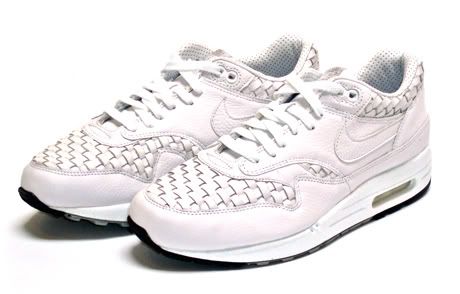
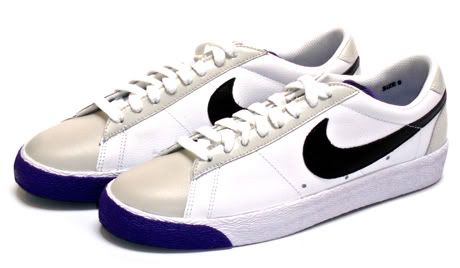
While the past couple of years has been pretty disappointing within streetwear, I'm glad to see some more simple sneaker colorways coming out this year..Cutting out all of the shit, the gimmicky use of materials like 3M and ridiculous design touches that make me want to just walk barefoot.
Often now am I seeing a backlash to basic design. Maybe people have realized the age old philosophy for good design German architect, Ludwig Mies van der Rohe coined "Less is more".
More and more American streetwear companies are seeing that simple and more 'mature' clothing is the way to go and actually give a reason to justify the high price due to the clothing's visual longevity. This trend has even filtered down to the design of the blogs (hypebeast, slamxhype, high snobiety..etc) Lets face it, that $200 all over print hoody you bought in 2007 is probably one of the worst clothing investments you could ever make.
Here are a couple of interesting finds..
"HUF"
"Staple Design"

5/2/08
Soft Boiled Eggs.
..Softboiled Eggies is something totally fresh for me and is a perfect example of L.A's. true art and music scene, which in my opinion is one of the strongest in the country. Softboiled Eggies are signed to Human Ear Music a label based in L.A. 'For L.A.'. Human Ear features some of the city's best local projects like Holy Shit and Julia Holter.
Here is what Human Ear Music has to say about their Softboiled Eggies:
"Softboiled Eggies is Janet Kim's whispering bedroom secret turned fab rock-n-roll experience. The unassuming, almost-improvised arrangements descend from a dreamlike reverie to evoke the repressed angst encoded in 50's/60's bubblegum-girl singles. Attention to rhythm is steady, while brushed in watercolor harmonies seem to rest between the beats like somnolent sheep."
+Softboiled Eggies

4/29/08
Covers.
A book's cover design is a major part in my decision every time I walk into a bookstore. To me a books cover should give the reader the initial mood and feeling of the story thats about to be embarked upon. When I picked up Haruki Murakami's Norwegian Wood without any prior knowledge of the story or even the author himself I felt that its cover gave a sense of perfection..From the colour choices and arrangement to the beautiful girl in the background it gave me the confidence to buy the book thinking, why would such amazing cover design be wasted on a uninteresting novel. Thank God I was right.
I finally decided to do some research on John Gall, the man credited for the novels design. Unsurprisingly, he has quite a few covers that really catch my eye. On a site simply called "Covers" John takes part in an interesting interview about his life and involvement with book cover design.
+COVERS

4/27/08
ANOTHER BLOG + Steven Vogel .interview 002.
Here is a 'back number' interview I did with independent writer Steven Vogel early last summer after the release of his book STREETWEAR- Insiders Guide. Despite the somewhat unattractive title the book is very honest and intelligently written. Nonetheless, the interview turned out to be a interesting set of Q&A and actually demonstrated one reoccurring theme throughout his book, the Internet and how it has almost single handedly shaped the way street culture is organized. Having exchanged everything for this interview via e-mail was something very ironic for me.
First off, can you give us a little bit of your background and information on what you’re currently up to?
I’m a skater, musician, fan and writer. Most of my past time I spent partying, skating and / or making music or fretting about music, and occasionally I write for a living too. Currently, or for the last year I’ve been working with Burton on all their special projects which has been very enjoyable. Mostly, I sit around play guitar, think too much, sometimes write the thoughts down and drink too much.
What motivated you to start your book STREETWEAR?
I have always liked writing and the subject matter is second nature to me, and in combination with my previous endeavors one thing led to another. It wasn’t as if I woke up one morning and said to myself “well damn Vogel, time to write that streetwear book today.” It all came about quite organically.
In the book you chose a host of persons to discuss their thoughts and roots in culture. What is it that you see in those individuals that represent the essence of street culture?
For one, the majority of people I chose we’re either friends, colleagues and / or people who’s work I have been into over the years. After that I chose some other contributors based on their contribution to the whole to bring a little subjectivity to the table.
Blogs have played a major role in the development of streetwear, one that is positive or negative depending on the person. Do you feel that they can ultimately ruin the true meaning of street culture, putting focus more on hype than the people and ideas behind it?
No. Blogs cannot, lazy people that rest on their laurels can. There are some blogs and web magazines out there that really do contribute creatively and intelligently to the whole, which is great. 
With the recent explosion of the fixed gear bike culture and New Rave, what place do you feel they have in street culture?
Well, that’s for each one of us to decide, I am hardly anyone to tell other people what is cool and what not. If people are into it, right on, that’s their gig and if they have to call it street culture to escape their sheltered suburban hell, cool. All I know for myself is that I couldn’t give a shit about New Rave, or rave in general, I have always hated that shit. I never understand the co-relation some people, especially in Europe, try to create between dance culture and what I am into and wrote about. Someone once told me it was all about looking hot in a club, but that’s bullshit. When I grew up I was never let into these “cool” clubs wearing what I wanted so I spent my time skating at night and hanging out with my friends. That’s something people really forgot today, being into what I wrote about wasn’t cool in 90s.
What ultimately makes a particular movement ‘accepted’ in culture? Is it just based off the fact some respected people are into the subject?
Interesting point, I never really thought about it like that and yeah you
are right. It's an interesting discussion whether the "fans" determine what street
culture is or those who provide the goods that constitute street culture.
It’s almost a catch 22 situation, chicken and egg sorta thing. That's why I don't consider myself to be so much a part of what this subculture has turned into. I think I am still stuck in the 90s.
What is the current state of street culture, where do you think its going?
Again, that’s something very individual I think. I know people who are completely fed up with it all and still participate in it every day because it is their job. On the other hand I also know people that after 20 years are still very passionate about it. I guess I am trying to say that you cannot generalize it, I think there are parts of what used to be street culture, which have removed itself from the greater part of it and new elements, have together. Some say this youth sub culture is becoming the new “urban” and to a certain degree I can see those signs as well, but there will always be an angry rebellious underbelly to it, that it is not urban outfitters conform.
Tell us some of your favorite young talent in street culture. Who are some brands/people you feel are promising, focusing more on substance than hype?
A young new brand, that’s a tough one, I really like Garbstore out of London, and even though it’s young brand, the person behind it has been at it for a long time.
In regards to American, European, and Asian corporations which do you feel have made the best attempt to understand street culture?
None, even though some American corporates have hired some interesting people, it will interesting how well they will do within the corporate confines.
To me doing a book solely on the streetwear aspect of street culture opens up a lot of possibilities, would you consider making a series of books focusing on different aspects of street culture?
Absolutely not, and maybe yes. At this point in time I am really not interested in making another book on youth culture, especially one that focuses on clothing. Maybe on Music or on People, that could be interesting.
Any last words?
Enjoy yourself it’s later than you think.
Black Lodges│Steven Vogel
Interview originally recorded on 4 June, 2007